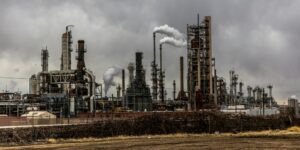

There is a valid concern in the climate community: does investing in carbon capture give big polluters an excuse to keep business as usual? It is a fair question. However, the science suggests that pitting emissions reduction against carbon removal creates a false choice.
In the global conversation about climate change, a sharp divide often forms between two camps. On one side are the proponents of rapid decarbonization—the urgent transition away from fossil fuels to renewable energy. On the other side are advocates for carbon capture technologies designed to remove CO₂ from the atmosphere. Often, these two approaches are pitched against each other. A common fear is the “moral hazard”: the idea that investing in carbon capture gives heavy polluters a “get out of jail free” card, allowing them to delay the necessary work of cutting emissions. It is a valid concern. If we rely solely on future technology to clean up our mess, we risk sleepwalking into a climate catastrophe.
However, the physics of climate change doesn’t deal in moral hazards—it deals in math. And the math is becoming increasingly clear: to secure a livable future, we do not have the luxury of choosing between reduction and removal. We need both. Carbon capture is not a replacement for decarbonization, but a necessary, supplementary tool to get us across the finish line.
Priority Number One: Decarbonization
Let’s be unequivocal: Carbon capture is no substitute for reducing emissions.
The most effective way to stop a bathtub from overflowing is to turn off the tap, not to grab a mop while the water is still running. In climate terms, “turning off the tap” is decarbonization.
We must aggressively transform our energy grids, electrify our transport systems, and improve industrial efficiency. Every ton of CO₂ we prevent from entering the atmosphere is far cheaper and more effective than trying to pull that same ton out of the air later.
Current carbon capture technologies cannot possibly scale fast enough to offset our current global emissions (roughly 37 billion tons of CO₂ annually). Relying on removal without reduction would be like trying to empty the ocean with a bucket. Therefore, phasing out fossil fuels and embracing renewables remains the primary engine of our climate strategy.
The “Last Mile” Problem: Why Reduction Isn’t Enough
If decarbonization is the engine, why do we need carbon capture at all? Why not just focus 100% of our resources on renewables?
The answer lies in the complexity of our modern world. Even in a best-case scenario where the energy grid becomes 100% green, there are specific sectors that are incredibly difficult to decarbonize. These are often called “hard-to-abate” sectors, and they generate residual emissions.
1. Heavy Industry and Agriculture
Consider the production of cement and steel, or the global shipping industry. These sectors rely on chemical processes or high-density fuels that electricity currently cannot replace. For example, the chemical reaction used to make cement releases CO₂ regardless of the energy source used to heat the kiln.
Similarly, agriculture, essential for feeding the global population, emits greenhouse gases through soil management and livestock that cannot simply be “switched off.”
Carbon capture acts as a counterbalance to these emissions that are hard or impossible to substitute or remove.
2. Historical Emissions
Perhaps the most compelling argument for carbon capture is that decarbonization only addresses the future. It does nothing to fix the past.
Since the Industrial Revolution, we have pumped billions of tons of carbon into the atmosphere. This “legacy carbon” is already up there, driving the heatwaves, storms, and instability we see today. Even if we hit absolute zero emissions tomorrow, that blanket of heat-trapping gas would remain for centuries.
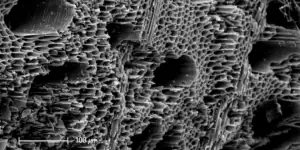
Reduction stops the problem from getting worse, but only carbon removal can start to turn the clock back. Technologies like biochar allow us to reach back in time, drawing down historical emissions to restore the atmosphere to safer levels.
The Math of Net Zero
To reach the global target of “Net Zero” by 2050, the equation must balance. “Net Zero” doesn’t mean “Zero Emissions”—it means that any carbon we put into the atmosphere is balanced by carbon we take out.
The Intergovernmental Panel on Climate Change (IPCC) has stated that almost all pathways to limiting global warming to 1.5°C involve some degree of carbon removal. We simply cannot reduce emissions fast enough to beat the clock without help.
In this context, carbon capture isn’t a loophole; it is the bridge that makes the math work. It covers the gap between what is physically possible to reduce and what is necessary for survival.
Biochar: A Solution with Benefits
Not all carbon capture is high-tech machinery sucking air through giant fans. Some of the most effective solutions are grounded in nature and biology.
This is where biochar shines. Biochar is a stable form of carbon produced from organic biomass. By converting biomass waste (which would otherwise rot and release CO₂) into biochar, we lock that carbon away in a stable solid form for hundreds or even thousands of years.
Unlike some industrial capture methods that simply store CO₂ underground, biochar provides immediate value to the ecosystem. When added to soil, it improves water retention, boosts nutrient health, and helps crops grow. It represents a form of carbon capture that is regenerative, not just corrective.
Getting Past the False Dichotomy
The debate between carbon capture and decarbonization creates a false dichotomy. We are past the point of “either/or.” We are firmly in the era of “yes, and.”
We need to push for maximum efficiency, renewable energy, and emissions cuts now. We must hold heavy polluters accountable and ensure they do not use removal technology as an excuse to stall. But simultaneously, we must scale up carbon capture solutions to handle the difficult remaining emissions and to begin the long work of atmospheric restoration.
Viewing carbon capture as an enemy of climate progress is a misunderstanding of the scale of the challenge. It is not an escape hatch for the fossil fuel industry; it is a critical tool for humanity. By combining aggressive decarbonization with robust carbon capture, we turn an impossible challenge into a solvable one.