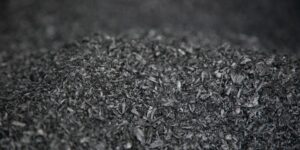
Adding biochar to livestock feed has moved from traditional charcoal remedies to a subject of agricultural research. While charcoal has historically been used to address digestive issues and poisoning, recent studies investigate biochar’s potential as a feed additive for performance improvement and environmental management.
In Europe, biochar feed products can be certified through the European Biochar Certificate (EBC-Feed) standard. In North America, regulatory pathways are still developing, with producers working within existing feed additive frameworks.
How Biochar May Work in Animal Digestion
Research suggests biochar may influence animal physiology through several pathways, though the magnitude and consistency of effects vary considerably.
Binding Compounds
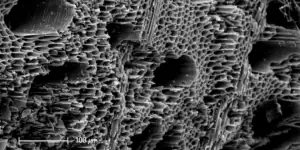
Biochar’s porous structure provides surface area for binding various compounds. Studies have demonstrated the ability to trap mycotoxins, certain pesticides, and heavy metals in controlled settings. However, the degree of binding in live animals depends heavily on biochar properties, dosage, and gut conditions.
Effects on Gut Microbes
Some studies report changes in gut microbial populations when biochar is included in feed. Research has found that biochar supplementation showed variable effects on rumen fermentation, with some trials reporting improved fiber digestion and others showing no significant change. The mechanisms remain under investigation.
Digestive Transit and Nutrient Availability
Biochar may affect feed passage rates and provide substrate for microbial colonization. Research results are mixed—some studies show improved nutrient digestibility, while others report no effect or even slight decreases.
Methane Emissions: Mixed Evidence
Enteric methane reduction is one of the most studied aspects of biochar supplementation. The results vary widely:
- Methane reductions ranging from 0% to approximately 20% have been observed across different studies, with high variability based on biochar type, production temperature, and inclusion rate
- Laboratory studies sometimes show larger reductions (up to 38% in some trials), but these controlled conditions often don’t translate to live animal performance
- Some biochar types show no effect on methane at all, with recent research on Holstein steers finding no significant methane reduction despite biochar supplementation
- Recent studies in ewes have shown more promising results, with 65-78% reduction in methane emissions, though these results require replication
- The most consistent results appear when biochar is combined with other dietary strategies, though isolating biochar’s specific contribution remains difficult
Current evidence suggests biochar may contribute to modest methane reductions in some applications, but it is not a standalone solution and effects are highly variable.
Performance Outcomes by Species
Cattle
Studies report mixed results on weight gain and milk production. Growth rate improvements range from negligible to approximately 8-12% in favorable studies, with some research showing improved feed conversion in local cattle breeds. However, other trials show no significant difference in performance. Inclusion rates typically range from 0.3% to 3% of dry matter intake.
Poultry
Evidence for poultry is somewhat more consistent. Research on broiler chickens shows mixed results, with some studies reporting reductions in mortality and improvements in feed conversion ratios of 3-8%. Biochar supplementation may also reduce poultry pathogens, contributing to improved gut health. Effects on egg quality show inconsistent results. Practical guides for poultry applications are available for farmers interested in implementation.
Swine
Research in pigs shows potential improvements in average daily gain of 5-7% in some studies. Reduced diarrhea incidence in young pigs has been reported, though not universally. Effects on feed efficiency are inconsistent across trials.
Publication bias likely exists, as studies showing no effect are less frequently published.
Nutrient Cycling and Manure Management
One of the more consistent findings involves biochar’s effects on manure:
- Biochar-amended poultry litter typically shows reduced ammonia release, with reductions ranging from 55-60% depending on conditions
- In swine manure systems, biochar can reduce acute ammonia emissions, though effectiveness varies with application method
- Cattle slurry amended with biochar shows ammonia emission reductions of approximately 20%
- Floating biochar covers on manure lagoons represent another application for emissions control
- The biochar becomes enriched with nitrogen and other nutrients during digestion and manure storage
- When applied to soil, biochar-enriched manure may provide more stable nutrient release compared to raw manure alone
- This nutrient loading can reduce the initial nitrogen immobilization sometimes observed with fresh biochar application to soil
The magnitude of these effects depends significantly on biochar properties, manure management practices, and environmental conditions.
Quality and Safety Standards
Not all biochar is suitable for feed applications. The EBC-Feed certification requires:
- Testing for polycyclic aromatic hydrocarbons (PAHs), with limits typically below 4 mg/kg for the sum of 16 EPA PAHs
- Heavy metal content below specified thresholds
- Absence of dioxins and polychlorinated biphenyls (PCBs)
- Documentation of feedstock and production temperature (typically above 550°C for feed-grade material)
Complete technical guidelines are available from the European Biochar Certificate organization, and certification overviews help producers understand the requirements. These standards help ensure that contaminants from the pyrolysis process or source material don’t enter the food chain. Biochar produced from clean plant material (such as forestry residues or crop residues) at controlled temperatures is generally considered safe when properly certified.
Practical Considerations
Farmers considering biochar supplementation should be aware of:
Costs: Biochar prices vary widely ($300-$2,000+ per ton) depending on feedstock, production method, and certification level. Economic returns depend on performance improvements and are not guaranteed.
Variability: Different biochar products produce different results. Surface area, pore structure, ash content, and production temperature all influence effectiveness.
Application rates: Most research uses inclusion rates of 0.3-3% of feed dry matter. Higher rates don’t necessarily produce better results and may reduce palatability.
Regulatory status: In the U.S., biochar may fall under different regulatory categories depending on claims made. Some producers market it as a processing aid or anticaking agent rather than making performance claims.
Current State of Knowledge
The biochar-livestock field remains in active development. While reviews show some benefits appear consistent—particularly around ammonia reduction and potential effects on gut microbes—the magnitude of production benefits (weight gain, milk yield, methane reduction) varies considerably across studies.
The most promising applications may be in integrated systems where multiple benefits combine: modest production improvements, manure management benefits, and soil amendment value. However, biochar is not a universal solution, and results depend heavily on matching the right biochar properties to specific production contexts.
Further research is needed to identify which biochar characteristics produce reliable effects and to develop standardized production protocols for feed-grade materials.