Addressing climate change requires both reducing emissions and actively removing carbon dioxide from the atmosphere for long-term storage. Carbon Dioxide Removal (CDR) technologies serve this second purpose. According to the IPCC’s latest assessment, limiting warming to specific levels will require removing billions of tons of CO₂ annually by mid-century. These methods extract CO₂ from the air and store it, helping to counterbalance emissions that are difficult or impossible to eliminate entirely.
Multiple CDR approaches exist, each with distinct characteristics, costs, and limitations. Together they form a portfolio of climate mitigation options.
Afforestation and Reforestation
Planting or restoring forests removes CO₂ from the atmosphere through tree growth. Trees absorb CO₂, storing it in trunks, branches, and roots. Research published in Science indicates that global tree restoration has substantial potential for carbon capture. The approach is relatively cost-effective, typically requiring modest investment while providing additional benefits including biodiversity improvement and ecosystem protection.
However, forests are vulnerable to reversal. Studies indicate that climate change significantly increases wildfire frequency in many regions, potentially releasing stored carbon back to the atmosphere. Forest carbon can also be lost through disease, drought, or deforestation. This vulnerability affects the permanence of forest-based carbon storage.
Bioenergy with Carbon Capture and Storage
BECCS combines renewable energy production with carbon removal. Plant material such as energy crops or wood waste is burned to generate electricity, and resulting CO₂ emissions are captured and stored in deep geological formations instead of entering the atmosphere. According to the Global CCS Institute, when properly stored in geological formations, captured CO₂ can remain locked away for thousands of years.
BECCS faces scaling challenges. Research in Nature Sustainability indicates that deploying BECCS at large scale could require extensive land area, potentially competing with food production and natural ecosystems. The technology also depends on infrastructure for capturing and transporting CO₂, with only dozens of facilities operating globally despite decades of development.
Direct Air Capture with Carbon Storage
DACCS uses chemical processes to extract CO₂ directly from ambient air, then compress and store it underground. Studies confirm this method provides long-term storage when CO₂ is properly stored in geological formations.
DACCS remains in early development. Current costs often exceed €800 per ton of CO₂ removed, and the technology requires substantial energy inputs. Companies including Climeworks and Carbon Engineering are working to reduce costs and improve efficiency.
Pyrolysis and Biochar Production
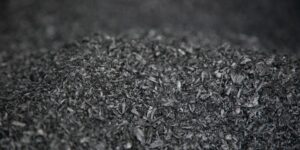
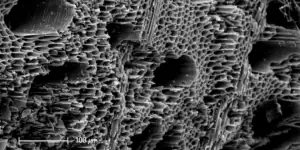
Pyrolysis transforms plant material into biochar by heating it in low-oxygen conditions. Research in GCB Bioenergy demonstrates that biochar can store carbon for centuries when added to soil. The process heats organic waste such as crop residues or forestry byproducts in an oxygen-limited environment, preventing the carbon from returning to the atmosphere through decomposition.
Pyrolysis generates three outputs:
- Biochar: A stable carbon material that can improve soil properties while storing carbon long-term
- Bio-oil: A liquid fuel that can substitute for fossil fuels in various applications
- Syngas: A gas mixture that can power the pyrolysis process itself, reducing external energy requirements
Pyrolysis utilizes waste materials that would otherwise decompose. Agricultural agencies estimate that billions of tons of suitable plant waste are produced globally each year, providing feedstock without competing with food production.
Comparing CDR Technologies
Climate analyses indicate that meeting climate goals will likely require deploying multiple CDR technologies simultaneously, each contributing based on its characteristics.
Cost varies significantly across technologies. Afforestation remains relatively affordable at approximately €10-40 per ton of CO₂. DACCS currently costs substantially more. Pyrolysis occupies a middle position, with costs declining as the technology develops.
Geographic and contextual factors affect deployment. Forests require adequate rainfall and suitable land. DACCS performs better where renewable electricity is abundant and affordable. Pyrolysis is applicable wherever agricultural or forestry waste accumulates.
Pyrolysis Characteristics and Applications
The International Biochar Initiative projects that pyrolysis could remove billions of tons of CO₂ annually within decades.
Multiple Product Outputs
Pyrolysis generates value beyond carbon storage:
Agricultural Applications: Studies show biochar can improve crop yields in degraded soils by enhancing nutrient retention and soil structure. Research indicates improved water retention during droughts and reduced fertilizer requirements.
Energy Recovery: Bio-oil and syngas generated during pyrolysis provide energy recovery from waste plant material, creating renewable fuel sources.
Waste Management: Converting agricultural residues that would otherwise decompose prevents additional greenhouse gas emissions while creating usable products.
Economic Products: Pyrolysis creates marketable products including biochar for soil amendment and bio-oil as renewable fuel, generating potential revenue streams.
Implementation Status
Pyrolysis-based carbon removal offers carbon dioxide extraction while generating products for agriculture, energy, and other applications. Costs approach €100 per ton in well-designed systems and continue to decline through technological improvements and scale.
The technology has been demonstrated in numerous installations worldwide. Wider deployment depends on supportive policies, carbon pricing mechanisms, and infrastructure investment.
Pyrolysis represents one component of the broader CDR portfolio needed to address atmospheric carbon accumulation while developing sustainable agricultural and energy systems.