In climate science, technologies fall into three categories based on their net carbon impact. Carbon positive technologies release more carbon than they remove. Carbon neutral technologies balance emissions and removals, creating no net change. Carbon negative technologies, however, actively remove more carbon dioxide from the atmosphere than they release during their entire lifecycle.
Biochar is considered one of the few scalable carbon negative technologies currently available. This classification is based on how the biochar production process interrupts the natural carbon cycle and creates permanent carbon storage. Understanding why biochar qualifies as carbon negative requires examining both the basic carbon flows and the detailed accounting of inputs versus outputs.
Carbon Neutral vs Carbon Negative: The Key Difference
In nature, plants function as temporary carbon storage. Through photosynthesis, they absorb carbon dioxide from the atmosphere and incorporate that carbon into their stems, leaves, and roots. This process effectively removes CO₂ from the air while the plant is alive and growing.
However, when plants die, this captured carbon does not remain locked away. Microorganisms in the soil decompose the dead plant material, breaking down its structure and releasing the stored carbon back to the atmosphere as carbon dioxide or methane. This decomposition process typically occurs over a period of months to several years, depending on environmental conditions and the type of plant material involved.
This natural cycle is considered carbon neutral because it creates no net change in atmospheric carbon levels over time. The carbon moves in a loop: from atmosphere to plant, and then back to atmosphere through decomposition. While this cycle is essential for healthy ecosystems, it does not help reduce the overall concentration of CO₂ in the atmosphere.
For a process to be carbon negative, it must break this cycle. Specifically, it needs to capture carbon from the atmosphere and then prevent that carbon from returning for an extended period, ideally centuries or longer. Additionally, the process of capturing and storing the carbon must release less CO₂ than it removes. This is where biochar production fundamentally differs from natural decomposition.
The Biochar Carbon Removal Process
Biochar production begins the same way as the natural cycle—with plants absorbing atmospheric carbon dioxide during growth. The difference emerges in what happens to that plant material afterward. Instead of allowing it to decompose naturally, the biomass undergoes a controlled thermal process called pyrolysis.
Pyrolysis involves heating organic material to temperatures between 400°C and 800°C in an environment with little or no oxygen. Without oxygen present, the material cannot combust. Instead, it undergoes a thermochemical transformation that fundamentally changes its structure and properties.
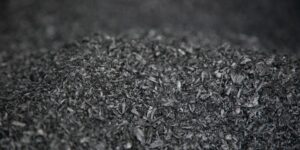
During this transformation, the process yields three distinct products. Volatile gases, primarily consisting of hydrogen, carbon monoxide, and methane, are released and can be captured. These gases, collectively called syngas, have significant energy content. Additionally, some of the biomass converts into bio-oil, a dense liquid that can be refined into fuel or chemical feedstocks. The remaining material—approximately 30-50% of the original biomass by weight—becomes biochar, a stable carbon-rich solid.
The key factor for carbon removal is what happens to the carbon itself. Research shows that roughly 50% of the carbon originally in the biomass remains locked in the biochar structure. Meanwhile, the carbon in the syngas and bio-oil can displace fossil fuel use when these products are utilized for energy, creating an additional climate benefit beyond the direct carbon storage.
Importantly, the carbon now stored in biochar would have returned to the atmosphere within just a few years through normal decomposition. By converting it to biochar instead, that carbon remains sequestered for a much longer timeframe, effectively removing it from the active atmospheric carbon cycle.
Why Biochar Carbon Stays Locked Away
The permanence of carbon storage in biochar is not simply a matter of physical containment. Rather, it results from fundamental changes to the carbon’s molecular structure during the pyrolysis process.
In living plant material, carbon exists in relatively complex organic molecules that microorganisms have evolved to break down. These molecules include cellulose, lignin, and various other compounds that serve as food sources for soil bacteria and fungi. Consequently, when plant matter enters the soil, these microorganisms can readily decompose it.
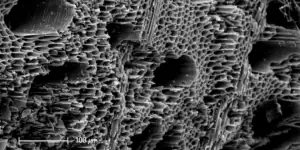
Pyrolysis, however, transforms this easily degradable carbon into structures similar to graphite, where carbon atoms arrange themselves in stable, fused ring formations. These structures are extremely resistant to both microbial and chemical breakdown. Soil bacteria lack the enzymatic capability to efficiently decompose these graphite-like structures, which means the carbon remains stable in the soil environment.
This stability has been documented extensively in scientific literature. The Intergovernmental Panel on Climate Change recognizes biochar as a method for long-term carbon storage, noting that properly produced biochar can persist in soil for hundreds to thousands of years. Some studies suggest that certain biochar types may remain stable for even longer periods, potentially on geological timescales.
The actual persistence period varies depending on several factors, including the temperature at which the biochar was produced, the original feedstock material, and the soil conditions where it is applied. Generally, biochar produced at higher temperatures shows greater stability, as the higher heat creates more complete transformation into graphite-like structures.
The Carbon Accounting: Why the Math Works Out Negative
The classification of biochar as carbon negative ultimately comes down to careful accounting of all carbon flows in the system. This means tracking not just the carbon stored in biochar, but also all emissions associated with producing and using it.
Carbon Removed from the Atmosphere
The carbon removal begins with plant growth. As plants photosynthesize, they absorb CO₂ from the air. When these plants are harvested and converted to biochar, approximately half of their carbon content becomes stable biochar. For example, processing one tonne of dry wood biomass typically produces biochar containing roughly 0.5 tonnes of carbon, which is equivalent to removing approximately 1.8 tonnes of CO₂ from the atmosphere (since each carbon atom was originally part of a CO₂ molecule).
Carbon Released During Production
However, producing biochar is not emissions-free. The process requires energy at several stages. Harvesting and transporting the biomass to the production facility consumes fuel. The pyrolysis process itself requires heat to reach the necessary temperatures. Additionally, if the biochar is then transported to its final application site, that creates further emissions.
The magnitude of these emissions varies considerably depending on the specific system design. Transportation distances play a major role—using locally available biomass reduces this impact significantly. The energy source for pyrolysis is perhaps the most important factor, and this is where biochar systems have a distinct advantage.
As mentioned earlier, the pyrolysis process produces syngas and bio-oil as byproducts. These products have substantial energy content. In well-designed systems, the syngas can be combusted to provide the heat needed for pyrolysis, making the process largely self-sustaining from an energy perspective. Studies of energy-efficient biochar production systems show that the energy content of the syngas often exceeds the energy required to run the pyrolysis process, meaning external energy inputs can be minimal or even unnecessary.
Furthermore, when bio-oil is used to displace fossil fuels, this creates additional emissions reductions that improve the overall carbon balance of the system, though these are typically counted separately from the direct carbon removal.
Net Carbon Balance
When all factors are accounted for, well-designed biochar systems achieve significant net carbon removal. Lifecycle analysis studies examining various biochar production pathways show that systems using waste biomass and efficient production methods typically achieve net carbon removal of 0.5 to 1 tonne of CO₂ equivalent per tonne of biomass processed.
This net negative balance depends on several key conditions. First, the biomass feedstock should be waste material or sustainable residues, not purpose-grown crops that might displace food production or require significant inputs. Second, the production process should minimize external energy inputs, ideally using the syngas byproduct. Third, the biochar should be applied in ways that ensure long-term storage, typically through soil incorporation or use in long-lasting materials.
When these conditions are met, biochar production removes significantly more carbon than it releases, clearly qualifying as carbon negative rather than merely carbon neutral.
Evidence from Scientific Studies
The carbon negative status of biochar is supported by extensive peer-reviewed research examining different production systems and application methods.
A comprehensive study by Woolf et al. analyzed the global technical potential of biochar systems and concluded that sustainable biochar production could offset up to 12% of current anthropogenic CO₂ emissions annually. The study examined various feedstocks and production methods, finding that most scenarios resulted in net carbon removal when biochar was produced from agricultural and forestry residues.
Research on biochar stability in soil has consistently confirmed the long-term persistence of biochar carbon. Studies using radiocarbon dating of biochar found in archaeological sites demonstrate that biochar can remain stable in soil for thousands of years under various environmental conditions. Modern field trials tracking biochar degradation rates over multiple years show annual carbon losses of less than 1%, confirming the multi-century to millennial timescales projected for biochar persistence.
The carbon removal efficiency varies based on feedstock type and production conditions. Lifecycle assessments show that woody biomass generally produces more stable biochar with higher carbon content than herbaceous materials, though both can achieve carbon negative outcomes. Production temperature also matters, with higher temperature pyrolysis generally creating more stable biochar, though this must be balanced against energy requirements.
These studies demonstrate that biochar’s carbon negative classification rests on solid scientific evidence rather than theoretical projections. Multiple independent research groups using different methodologies have reached similar conclusions about biochar’s capacity for net carbon removal.
What Makes Biochar Different from Other Carbon Removal Methods
Understanding biochar’s carbon negative status becomes clearer when comparing it to other carbon dioxide removal approaches.
Direct Air Capture technology, for instance, is also carbon negative. However, it requires substantial energy inputs to run the chemical processes that extract CO₂ from ambient air. Unless powered entirely by renewable energy, these energy requirements can significantly reduce the net carbon removal. Additionally, DAC currently operates at much higher costs per tonne of CO₂ removed.
Afforestation and reforestation are often discussed as carbon removal strategies. While trees do remove carbon from the atmosphere, this removal is temporary unless the forests are carefully managed in perpetuity. Trees can release their carbon through natural decomposition, forest fires, or harvesting. This makes forest-based approaches better described as carbon neutral or carbon positive over long timescales rather than truly negative.
Bioenergy with Carbon Capture and Storage combines biomass combustion with CO₂ capture, similar to biochar in using plant-captured carbon. However, BECCS requires extensive infrastructure for CO₂ transport and geological storage, limiting its deployment to locations with suitable storage formations. Biochar, by contrast, stores carbon in a distributed manner wherever it is applied.
Biochar’s advantages include its use of waste materials that would otherwise decompose or be burned, its production of a useful soil amendment product that provides value beyond carbon storage, and its proven permanence over archaeological timescales. Furthermore, biochar production can be deployed at various scales, from small farm operations to industrial facilities, making it more flexible than many other carbon removal approaches.
Conclusion
Biochar qualifies as carbon negative because it fundamentally alters the natural carbon cycle in a way that creates long-term atmospheric CO₂ reduction. The process begins with plants capturing carbon from the atmosphere, continues with pyrolysis converting that carbon into a stable form, and concludes with biochar remaining in soil or materials for centuries to millennia.
The carbon accounting supports this classification. While biochar production does require energy and create some emissions, well-designed systems remove substantially more carbon than they release. The key mechanisms that make this possible include the high stability of biochar carbon, the energy self-sufficiency achievable through syngas utilization, and the use of waste biomass that would otherwise decompose and release its carbon anyway.
Several conditions determine whether a specific biochar system achieves carbon negative performance. The feedstock should be waste material or sustainable residues rather than purpose-grown crops. Production should be energy-efficient, ideally using process byproducts for energy. The biochar must be applied in ways that ensure long-term storage rather than uses that would release the carbon within short timeframes.
When these conditions are met, biochar represents one of the most practical and scalable carbon negative technologies currently available. It operates at commercial scale today, uses existing waste streams, produces valuable co-products, and demonstrates proven permanence. For these reasons, biochar is increasingly recognized as an essential component of carbon removal strategies needed to address climate change.